
Immune cells have evolved to protect individuals and communities from an incredibly diverse array of pathogens. Through incredibly precise intra and inter-cellular communication, the human immune response is one of the most powerful and efficient forces in nature. Engineering of this response has the potential to redirect immunity to treat nearly any disease. The paradigm of synthetic immunity is CAR T cell therapy, in which T cells are engineered to express chimeric receptors that combine multiple immunologic functionalities into one molecule. The first generation of this therapy has proven that T cell immunity can be trained to target cancer, but current therapies cure less than half of patients and can only be used in a few cancers.
For synthetic immunity to reach its full potential, the next phase in development must be driven by a deeper understanding of the biology regulating the activity of these engineered cells. Through deep molecular interrogation, we aim to design novel cellular therapies with precise, regulatable and, most importantly, enhanced function. Our work integrates classical and systems immunology with bioengineering and structural biology to manipulate T cell circuits and unleash the full potential of the human immune response.
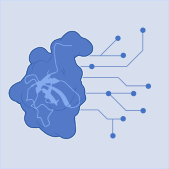
While based on natural immune proteins, synthetic receptors do not faithfully recreate the molecular pathways that are stimulated by their parental counterparts. Understanding how these distinctions lead to productive or defective cellular function is critical to purpose-driven design of cell therapies. Through integration of functional and systems immunology assays, we are identifying core molecular pathways that control engineered T cell function and using novel protein engineering tools to manipulate those pathways, creating synthetic molecular circuits that enable the precision T cell function needed for control of cancer.
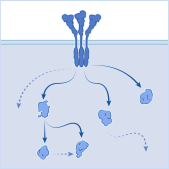
While a great deal is understood about the need for a “signal 2” to activate T cell function, the majority of our knowledge is derived from the biology of CD28, the paradigmatic costimulatory receptor. Currently 4 of 6 FDA-approved CAR T cell products contain 41BB, a protein whose regulatory circuitry is less defined. Both clinical and pre-clinical data confirm that 41BB signaling directs unique cellular circuitry with important implications for T cell function, most notably that 41BB-based CAR T cells persist for longer as memory cells.
We have shown that, unlike CD28, antigen-independent (tonic) 41BB activity is beneficial to CAR T cell function. Using high-resolution transcript and chromatin sequencing, we identified a driver of 41BB-driven fitness and have adapted novel protein engineering tools to "remote control" this program. We aim to continue decoding the 41BB regulatory pathway in engineered and endogenous T cell responses. In parallel, we are working to exploit the unique features of 41BB - both structural and biochemical - to design better synthetic receptors.

CARs are modular proteins, composed of fragments of endogenous receptors. Despite this modularity, their design hasn't changed in nearly 20 years. Efforts to enhance receptor function are often "trial and error" - replacing one domain with another in an incremental fashion. Novel computational tools have led to a revolution in protein design that can dramatically enhance the efficiency and functionality of synthetic receptors. We are using these tools to engineer better synthetic receptors and signaling mediators - from individual domains to entire proteins. This work integrates molecular biophysics, protein biochemistry and classical immunology to re-imagine the design of immunotherapies.
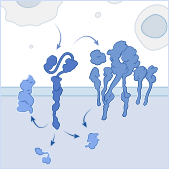
CARs are designed to be lone actors, completely independent activators of T cell function. But are they? Endogenous T cell proteins are complex ecosystems that interact in a dynamic fashion. How CARs integrate into the repertoire of endogenous T cell protein functions remains unclear. Using a range of technologies including high-resolution microscopy, proximity-labeling and genome engineering, we are dissecting the manner in which CARs disrupt or complement these protein ecosystems, and which endogenous proteins intrinsically support or suppress CAR function.
Zooming out, we are also working to understand how CAR-engineered T cells interact with endogenous immune cells as they engage with cancer cells. CAR T cells are a dominant force in anti tumor responses, but unlikely the only immune cells responsible for tumor regression. Using novel in vitro and syngeneic murine models, we are working to understand the immune micro and macroenvironmental implications of CAR-driven T cell activation and developing techniques to support endogenous immune cell function.
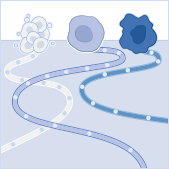
Several studies have aimed to trace cancer cell evolution in response to CAR T cells, revealing the importance of CD19 loss in therapeutic resistance. Other studies have traced CAR T cell evolution after infusion, identifying the role of dysfunctional circuitry in impairing anti-tumor responses. No studies to date have simultaneously traced how tumor cells, microenvironmental cells and CAR T cells dynamically co-evolve over time. We have developed clinical protocols to serially sample all compartments from patients receiving CAR therapy for several diseases. Using high-resolution DNA, transcript and protein evaluation, we are working to elucidate how these cell types influence each other and the features that associate with successful response or disease progression.